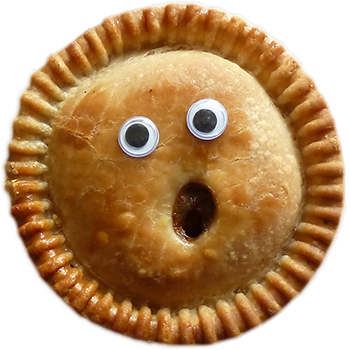
Fresh guts

For reasons I don’t need to go into, earlier this week I found myself watching this American gentleman’s video on how to fellate a fish:

…actually, perhaps I do need to go into it.

There were some wild sea bass on sale in Tesco, so I bought one. But I rather stupidly forgot to ask the Tesco fishmonger to remove the guts. So, never having done so before, I found myself having to consult YouTube on how to scale and gut a fish. Having seen how to do it properly, I ended up inventing my own way.

Now that I have gone through the process of gutting one, I have finally worked out what it is that I most like about fish:

Their outsides.

Grutness

Some say that Grutness is a state of mind, but, as I was recently delighted to read in Tim Dee’s excellent book The Running Sky, it is also a place:

Grutness

The hamlet of Grutness, Shetland
Image © Tom Pennington, licensed under Creative Commons Licence.

Imagine my even greater delight when I realised that I have actually been within 600 yards of Grutness. In March 1985, some archaeological colleagues and I paid a very wet visit to the nearby ancient settlement of Jarlshof.

Apparently, the name Grutness is from the Old Scandanavian grjót nes, meaning gravel promontory.

So, there you have it: Gruts means gravels.

What does Grutness mean to you chaps?


See also: Gruttish

Not exactly Pythagoras’ Theorem

I went to buy a book in Waterstones this week. Its recommended retail price was £25, but there was a sticker on the front saying there was £9 off. Woo-hoo!

The girl on the checkout zapped the book. “Oh, the computer hasn’t taken the £9 off!” she said, and she walked away.

I watched open-mouthed as the girl returned a minute later with a pocket calculator and began to punch in a calculation.

“It’s £16,” I said: “twenty-five minus nine is sixteen.”

“You’re right!” the girl said, clearly impressed. “I’m hopeless at maths.” I didn’t say that I could tell.

“The trick is to take off ten and add one,” I said. The girl looked at me as if I was from another planet. “Taking off ten and adding one is the same as taking off nine, but it’s easier,” I tried to explain. The girl looked back at me blankly.

So I paid my money and left.

Thinking about it afterwards, I should have pointed out that 9, 16 and 25 represent the squares on the sides on a classic Pythagorean 3, 4, 5 triangle.

That should have made it a lot easier.